
Adding session providers
Session bookings are made against a session provider - the person or organisation actually delivering the session. An instructor, a coach, a practitioner, a consultant.
This article applies if you enabled Session Booking during setup.
Providers are clients with a flag
Section titled “Providers are clients with a flag”There’s no separate “providers” screen. A session provider is a client record with Is Session Provider ticked.
That catches people out at first, but it’s deliberate: the same organisation is often both. A physiotherapy practice that rents your treatment room and runs classes in it is one record, not two - one set of contact details, one history, one invoice trail.
Adding one
Section titled “Adding one”Go to Clients & Services → Client and create a new client.
Fill in their details as you would for any client, then tick Is Session Provider.
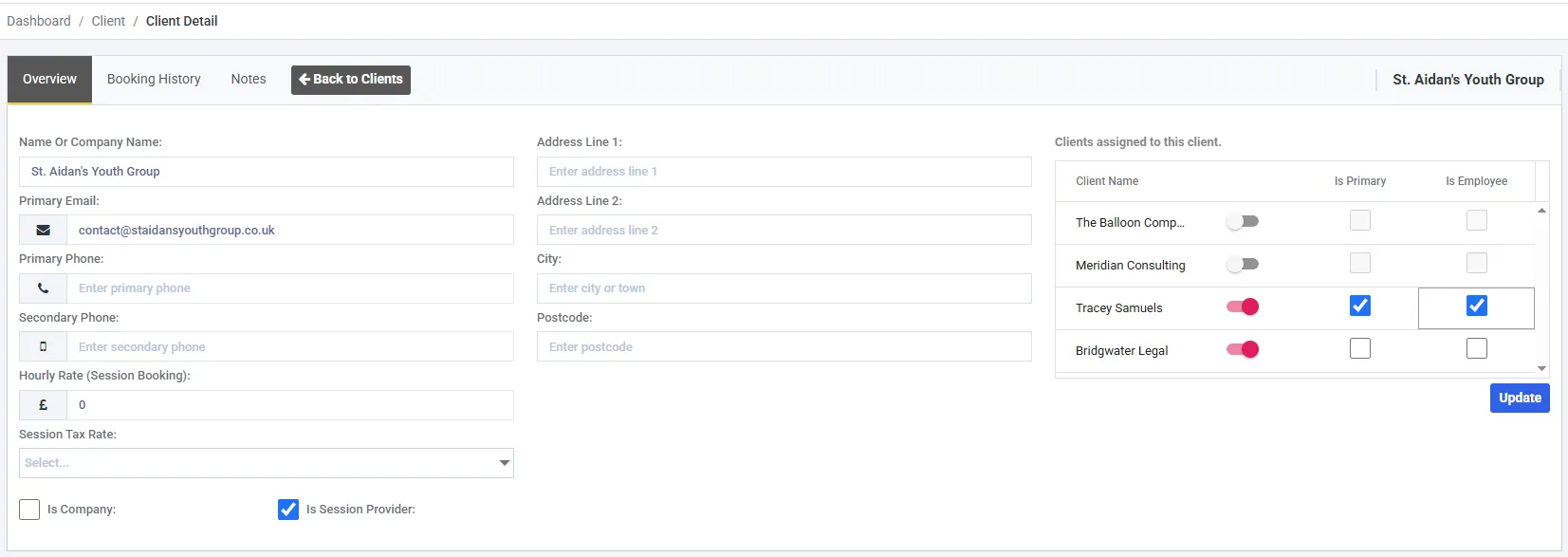
A client with Is Session Provider ticked, which is what makes them bookable.
Two fields on this screen belong to the provider rather than the client: Hourly Rate (Session Booking) and Session Tax Rate. They set what this provider’s sessions cost by default, in the same way a space carries its own hourly rate.
That’s what makes them selectable when you create a session booking. A client without it can still book and be invoiced - they simply can’t have sessions scheduled against them.
Providers are what you’re billed for
Section titled “Providers are what you’re billed for”Each active session provider is one bookable item, at £2 per month - the same rate as an active space.
The important part is what isn’t counted: not sessions, not session types, not attendees, not slots. Ten instructors running two hundred classes a month between them is ten bookable items. The class count makes no difference at all.
Deactivate a provider who’s no longer working with you and they stop counting.
Adding the rest
Section titled “Adding the rest”Add every provider you schedule against. You can’t create a session booking without one, so this is the step that unblocks the calendar.
Set up your booking types - including how long a session runs by default.